Thinking of Becoming a Dental Nurse in 2026? Read This First
Dental Nursing in 2026: Why This Is the Smartest Time to Enter the Profession.
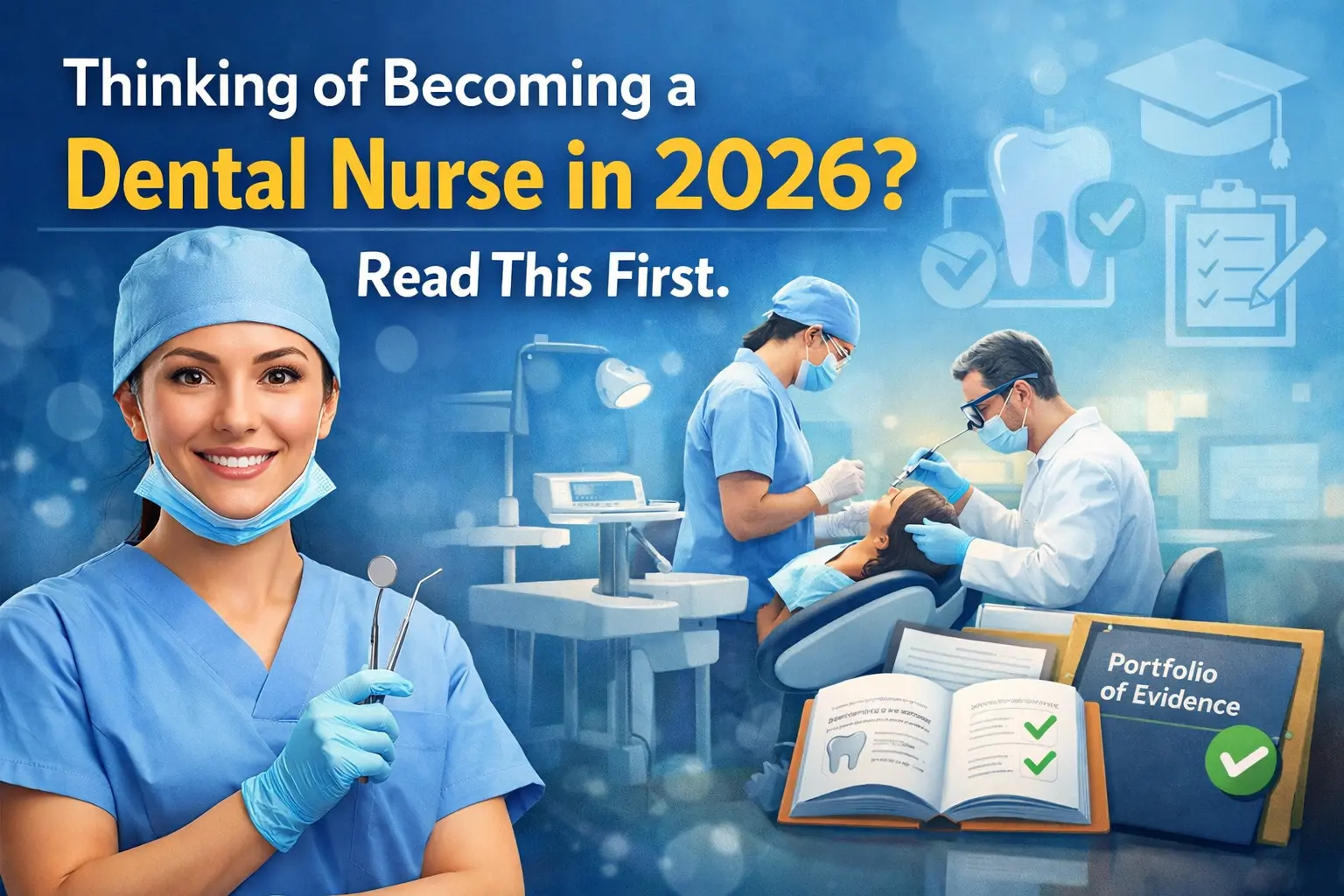
The start of a new year often brings career reflection. For many, 2026 is not about vague resolutions—it’s about finding a stable, respected healthcare role with long-term progression.
Dental nursing continues to be one of the most in-demand, and undervalued entry points into UK dentalcare. Yet when approached with care, competence and commitment, the role offers security, flexibility, and genuine professional status.
This article is written for:
- Individuals considering a Dental Nursing course
- Dental practices looking to recruit and train the right staff
- Career changers who want real-world healthcare experience, not theory-only study
Let’s be clear about what dental nursing really involves—and how to choose the right path.
The Reality of Dental Nursing
Dental nursing is not simply “assisting a dentist.”
A trained dental nurse is legally accountable, professionally regulated, and central to patient safety.
In 2026, a competent dental nurse must be able to:
- Support complex clinical procedures
- Manage infection control to national standards
- Communicate effectively with anxious patients
- Maintain accurate clinical records
- Understand safeguarding, consent, and confidentiality
- Work under pressure in a regulated environment
This is why formal training and qualification matter—and why shortcuts will fail.
Why Dental Nursing Demand Is Growing in 2026
Several forces are driving sustained demand:
1. Regulation and compliance pressure
CQC expectations and GDC standards mean practices need trained, accountable staff, not unqualified assistants.
2. Changing patient expectations
Patients expect professionalism, communication, and safety—dental nurses are often the first and last point of contact.
3. Career mobility
Dental nursing is increasingly used as a gateway to:
- Dental hygiene or therapy
- Radiography
- Practice management
- Teaching and assessment roles
The Dental Nursing Course: What Actually Matters
Not all dental nursing courses are equal. In 2026, the difference between success and failure usually comes down to two critical factors.
1. Real clinical exposure
Dental nursing cannot be learned purely online.
A proper course requires:
- Employment in a dental practice
- Witnessed procedures
- Interaction with patients
- Logged evidence over time
Courses that minimise or bypass this lead to exam failure or deferral.
2. Structured support
Many learners fail not because they lack ability—but because they lack structure.
Effective programmes provide:
- Clear timelines
- Tutor feedback
- Portfolio of Evidence (PoE) guidance
- Exam readiness checks
- Early intervention if learners fall behind
Without this, learners often discover problems too late.
Common Mistakes Learners Make (and How to Avoid Them)
Mistake 1: Choosing the cheapest course
Low fees often mean:
- Minimal tutor support
- Poor PoE guidance
- Exam deferrals
- Hidden costs later
Mistake 2: Underestimating the Portfolio of Evidence (PoE)
The Portfolio of Evidence is not paperwork—it is proof of competence. Poor engagement here is the number one reason learners are delayed.
Mistake 3: Poor communication
Failing to respond to tutors, missing deadlines, or disengaging from the VLE invariably leads to failure to progress
Mistake 4: Treating dental nursing as “temporary”
Practices invest more in learners who show commitment and professionalism from day one.
What a Strong Dental Nursing Candidate Looks Like in 2026
Successful learners typically demonstrate:
- Reliability and punctuality
- Willingness to learn
- Professional communication
- Accountability
- Respect for patient safety
- A caring disposition
You do not need prior healthcare experience—but you do need the right mindset.
Why January Is the Right Time to Start
January enrolment offers:
- A clear annual learning cycle
- Early momentum before exam deadlines
- Strong employer engagement after year-end planning
- More time to build a solid PoE
Waiting “until later” often leads to rushed portfolios and unnecessary stress.
Final Thought: Dental Nursing Is a Profession, not a Stopgap
Dental nursing in 2026 is no longer an informal role—it is regulated, assessed, and respected.
Those who approach it seriously gain:
- A nationally recognised qualification
- Long-term employability
- Access to further clinical progression
- A stable healthcare career
Those who rush, cut corners, or choose poorly often pay the price later.
If you are going to do it—do it properly.
Next Steps
If you are considering a Dental Nursing course—or if your practice is looking to train a learner—seek a programme that prioritises quality, compliance, and real support.
The right training does not just get learners through exams.
It prepares them for a professional future.