Portfolio of Evidence (PoE) Explained: How to Complete It Correctly and Avoid Delays or Rejection
For trainee dental nurses, the Portfolio of Evidence (PoE) is not simply coursework—it is a formal, regulated record of clinical competence. Each year, a significant number of learners experience delays, resubmissions, or rejection because their PoE does not meet the required standard set by National Examining Board for Dental Nurses (NEBDN).
This guide explains, clearly and practically, what the PoE is, how to complete it correctly, and how to avoid the most common mistakes in 2026.
What Is the Portfolio of Evidence (PoE)?
The PoE is a verified record of your real workplace experience as a trainee dental nurse. It demonstrates that you have:
- Assisted safely and competently across a required range of dental procedures
- Applied knowledge in line with GDC standards and safe practice
- Been directly observed and signed off by an appropriately qualified assessor
Without a fully completed and verified PoE, you cannot progress to the NEBDN examinations, regardless of academic performance.
Why PoE Standards Matter More in 2026
In recent years, NEBDN has strengthened its scrutiny of portfolios to ensure:
- Authentic workplace learning
- Consistent national standards
- Patient safety and professional accountability
As a result, incomplete, poorly evidenced, or incorrectly signed PoEs are increasingly delayed or rejected. Learners must now demonstrate quality, accuracy, and compliance, not just volume.
What a Compliant PoE Must Include
A correctly completed PoE must show evidence across three core areas:
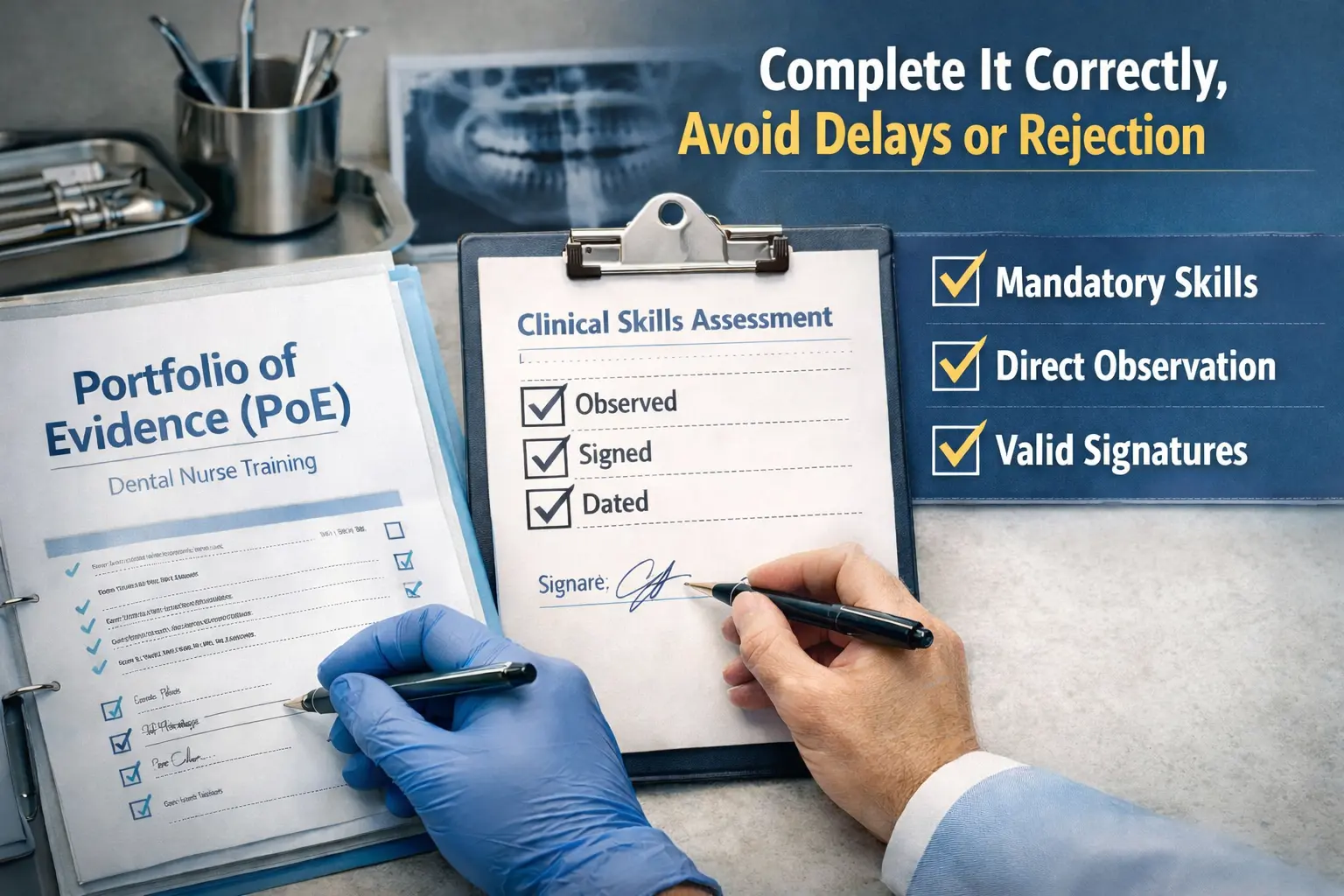
1. Mandatory Clinical Skills
You must evidence competence in areas such as:
- Chairside assistance across a range of procedures
- Cross-infection control and decontamination
- Preparation of instruments, materials, and equipment
- Patient communication and support
Each activity must be observed, dated, and signed.
2. Direct Observation and Assessment
Every skill entry must include:
- The exact procedure performed
- Confirmation it was personally observed
- A qualified assessor’s signature
- The correct date order (no backdating)
Self-reported or retrospective entries are not acceptable.
3. Consistency with trainee dental nurse Role
Your evidence must align with:
- Your actual job role
- The services offered by your dental practice
- A realistic progression of skills over time
Overly generic or copied entries are a common red flag.
Most Common Reasons PoEs Are Delayed or Rejected
Based on internal audits and learner feedback, the most frequent issues include:
- Plagiarism or copying of AI generated materials
- Missing or invalid witness signatures
- Missing or invalid assessor signatures
- Skills signed off without evidence of direct observation
- Large gaps between activity dates
- Inconsistent writing or formatting
- Entries that do not match the learner’s workplace setting
- Last-minute completion close to submission deadlines
These issues almost always result in requests for correction, causing exam deferral.
How to Complete Your PoE Correctly (Step-by-Step)
Step 1: Start Early
Begin logging evidence from the start of your work experience. Waiting until later creates errors, memory gaps, and rushed sign-offs.
Step 2: Record Little and Often
Complete entries weekly, not monthly. This shows natural progression and avoids suspicion of retrospective completion.
Step 3: Use Clear, Specific Language
Describe what you did, not what “usually happens”. Avoid vague phrases such as “assisted as required”.
Step 4: Get Immediate Sign-Off
Ask your assessor to review and sign as close to the activity date as possible. Delayed sign-offs are frequently questioned.
Step 5: Cross-Check Before Submission
Before final submission, check:
- All required skills are completed
- Dates are logical and sequential
- Signatures are clear and valid
- No sections are left blank
Who Can Sign Your PoE witness?
Your PoE must be witnessed or signed by a qualified workplace assessor, typically:
- A GDC-registered senior dental nurse, dental therapist or dentist with appropriate experience
What Happens If Your PoE Is Not Accepted?
If your PoE does not meet requirements:
- You may be asked to resubmit corrections
- Your exam entry may be delayed
- In serious cases, you may need to repeat clinical evidence
This can add months to your qualification timeline.
Final Advice for 2026 Learners
Treat your PoE as a professional clinical record, not a formality. Successful learners approach it with:
- Discipline
- Accuracy
- Ongoing engagement
If in doubt, ask early, keep evidence current, and follow your provider’s guidance closely.
Need Support With Your PoE?
At the School of Dental Nursing, learners receive structured guidance, assessor support, and compliance checks to ensure portfolios meet NEBDN standards before submission.
Completing your PoE correctly is not just about passing—it is about demonstrating you are safe, competent, and ready for professional practice.