0208 993 4500
 dental@schoolofdentalnursing.com
 +44 7856 755880

Here’s something most course adverts won’t tell you: two courses with almost identical names can lead to very different results. One fluoride varnish certificate might be assessed in a real practice and fully accepted by your employer. Another might be a short online module that leaves you with a certificate but no permission to use the skill. The difference isn’t in the title. It’s in the details most people never ask about.
This guide is written for beginners. It explains what fluoride varnish is, what a certificate can and can’t do for you, and the exact questions to ask any provider before you pay.
What Is Fluoride Varnish, and Why Does It Matter?
Fluoride varnish is a sticky, highly concentrated fluoride coating painted onto the teeth with a small brush. It sets on contact with saliva and slowly releases fluoride, which strengthens the outer layer of the tooth and helps prevent decay.
It’s one of the simplest, most effective prevention tools in dentistry. National guidance for dental teams in England, Delivering Better Oral Health, recommends applying it to most children and young people twice a year, and more often for those at higher risk of decay.
Where Dental Nurses Fit In
Applying fluoride varnish is an additional skill for registered dental nurses. That means it isn’t part of basic training. You learn it after you qualify.
Under the General Dental Council’s scope of practice (the official list of what each dental professional is trained and allowed to do), dental nurses can apply fluoride varnish in two ways:
- On prescription from a dentist. A prescription is the dentist’s written instruction that a specific patient should receive it.
- As part of a structured dental health programme, such as a community scheme visiting schools or nurseries.
Start From the Basics: What Should a Good Certificate Prove?
Before comparing courses, ask what a certificate is actually for. Strip it back to first principles and a good one should show three things:
- You understand it: the science, the risks and the patients who benefit.
- You can do it safely: in real situations, observed by someone qualified.
- It’s trusted: your employer accepts it as evidence of competence.
A course that covers only the first point leaves a gap your employer will have to fill. Keep these three tests in mind as you read the questions below.
Know Who Awards the Certificate
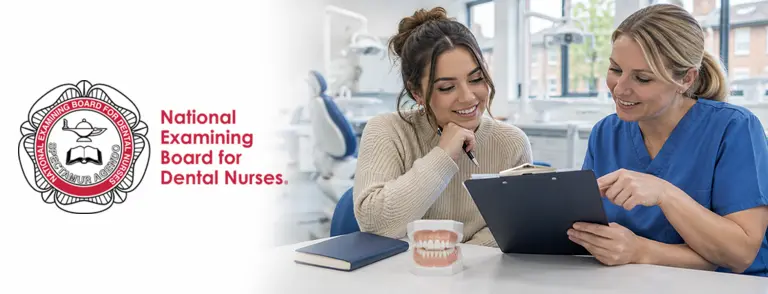
Not every fluoride varnish certificate is the same type of qualification. For example, the NEBDN Certificate in Fluoride Varnish Application is designed for GDC-registered dental nurses. It’s assessed through a work-based Record of Competence (a logbook of observed practical work) rather than an exam. Other providers issue their own certificates, which can also be valuable, but you should know which kind you’re getting.
This is where signal versus noise helps. Words like “accredited”, “recognised” or “CPD-approved” on a website are noise until you know what they apply to. The signal is a clear written answer to these questions:
- Who issues the certificate? The provider itself, or an external awarding body?
- Does that status apply to this specific course, or just to the training school in general?
- What name will appear on the final certificate?
A school can hold accreditation for one qualification without it covering every course it runs. Always check at course level.
Ask How Practical Skills Are Assessed
This is the most important question, and the one most often skipped.
Try second-order thinking, asking “and then what?” Imagine you pick the cheapest, quickest online course with no practical assessment. You pass. And then? Your practice may not let you apply varnish to patients until someone has observed you. And then? You need extra supervision you didn’t plan for. The quick option has become the slow one.
Ask the provider:
- Is practical application observed and assessed?
- Do I need access to a dental practice and suitable patients?
- Who can supervise and sign off my work?
- Is there a logbook or portfolio to complete?
- What happens if I can’t finish the practical part in time?
Check Entry Requirements and Your Role
Many fluoride varnish courses are designed for GDC-registered dental nurses, but requirements vary. Check whether you need to be registered, working in a practice or supported by a supervising dentist.
Then speak to your employer before you enrol. Ask how the training would fit your role, and what sign-off, supervision or paperwork they’ll need before you apply varnish to patients.
Compare Support and Study Format
Online learning can fit around work and family. Face-to-face learning gives you direct contact with tutors and classmates. Neither is automatically better. What matters is the support behind it. Ask:
- How do I contact a tutor, and how quickly do they usually reply?
- Who marks my work, and how is feedback given?
- Can I resubmit if I don’t pass first time?
- Which learning resources are included in this course?
Get the Full Cost in Writing
The advertised price isn’t always the total. Request a written breakdown that includes:
- Tuition and learning materials
- Assessment, certification and any resubmission fees
- Practical sessions, equipment or travel
- Payment plan terms, deposits and refund rules
Avoid the Most Common Expensive Mistakes
Here’s a useful trick called inversion: instead of asking “How do I choose well?”, ask “How could I waste my money?” You’d:
- Choose on price or speed alone
- Assume a short certificate replaces dental nurse training (it doesn’t; it’s a post-registration skill)
- Assume it automatically changes your role, guarantees a job or leads to promotion
- Skip asking your employer first
- Accept vague answers instead of written ones
Avoid those five and you’ve avoided most of the regret.
Your Copy-and-Paste Question List
Send this to any provider before you pay:
Hello, I’m interested in your fluoride varnish certificate. Before enrolling, could you confirm in writing:
- Who issues or validates the certificate, and what will it say?
- What are the entry requirements?
- Is practical work observed and assessed, and who can sign it off?
- How is the course assessed, and are resubmissions allowed?
- What tutor support and feedback are included?
- What is the total cost, and what are the payment and refund terms?
Thank you.
Frequently Asked Questions
Who is a fluoride varnish certificate for?
Usually GDC-registered dental nurses who want to add fluoride varnish application to their skills. Always check the specific course’s entry requirements.
Is it the same as a Level 3 Diploma in Dental Nursing?
No. The diploma is the qualification that lets you register as a dental nurse. A fluoride varnish certificate is a focused skill you add afterwards.
Does the certificate let me apply varnish on my own?
Not by itself. Dental nurses apply fluoride varnish on a dentist’s prescription or as part of a structured dental health programme, and your employer will have their own procedures too.
Turn One Skill Into a Bigger Career
A fluoride varnish certificate is a small qualification with a big message: you’re moving from supporting treatment to actively preventing disease. Many dental nurses pair it with Oral Health Education, building a role where they teach, prevent and lead.
At the School of Dental Nursing, we offer a Certificate in Fluoride Varnish Application, alongside our Diploma in Dental Nursing for anyone just starting out. Ask us any of the questions above. We’d be happy to answer them in writing.
Ready to step into your potential and transform your career? Your journey can start today: Apply Now – School of Dental Nursing Application Form
Got questions, or want to talk it through with an expert educator first? We’d love to hear from you: Book a Call with an Advisor