0208 993 4500
 dental@schoolofdentalnursing.com
 +44 7856 755880

Results day can feel like a verdict. It isn’t. It is one piece of information about one set of exams on a few days in May and June. What you do next tells you far more about your future than the grades on that envelope.
If you are interested in healthcare, a dental nursing course after A-levels is one route worth serious thought. You can start working in a real clinical setting straight away, earn while you learn, and gain a recognised qualification in around a year. This guide explains how it works, what it can lead to, and how to decide whether it is right for you.
Pause Before You Decide
The first rule after disappointing results is surprisingly simple: don’t make a big decision in a panic. A helpful thinking tool here is inversion. Instead of asking “What should I do?”, ask “What choice would I most likely regret?” For most people, the answer is rushing into something they have not looked into, just to have an answer.
Take a day. Then look honestly at your options. These might include Clearing for a university place, resitting, an apprenticeship, or starting a career-based qualification such as dental nursing. Each suits different people. The right one is the one that fits your interests and how you like to learn.
What Is Dental Nursing?
A dental nurse is the dentist’s clinical partner. You prepare the surgery, assist during treatment, keep accurate patient records and help nervous patients feel at ease. A big part of the role is cross-infection control, which means making sure germs cannot pass from one patient, instrument or surface to another. Think of the strict hygiene rules in a professional kitchen, applied to every single appointment.
How a Dental Nursing Course Works
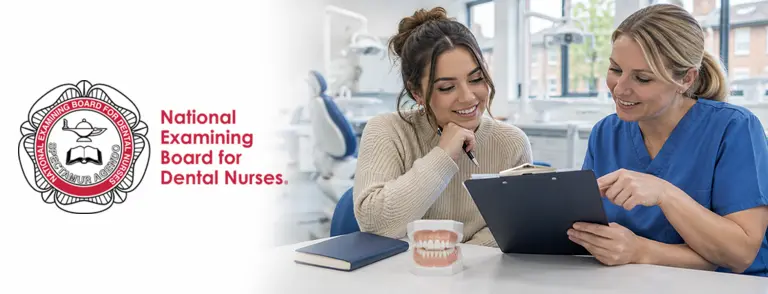
The qualification is the NEBDN Level 3 Diploma in Dental Nursing, awarded by the National Examining Board for Dental Nurses (NEBDN). It combines two kinds of learning:
- Practical experience: you work as a trainee dental nurse in a dental practice, learning alongside experienced professionals with real patients.
- Theory: you study with a course provider, either in the classroom or through our online Diploma in Dental Nursing course.
Because you are employed as a trainee, you earn a wage while you study. Once you pass, you can apply to join the General Dental Council (GDC) register, the official list of qualified dental professionals in the UK, and work as a qualified dental nurse.
Why This Path Can Make Sense After A-Levels
Try some second-order thinking: look past the first effect of a decision to what follows. University can be a brilliant choice, but it usually means several years of study and student debt before you start earning in your field. Dental nursing flips that order:
- You earn first, from your first months as a trainee.
- You gain real clinical experience that many university applicants simply do not have.
- You qualify in around a year, rather than three or more.
- You keep your options open. NEBDN says its Level 3 Diploma in Dental Nursing now attracts UCAS points, which can support a future university application.
Your A-Levels Still Count
Here is something many students do not realise. Dental nursing is not a detour away from higher education; for some people, it becomes a route back into it.
For example, Queen Mary University of London accepts the NEBDN dental nursing qualification in place of one A-level for its dental therapy and hygiene degree, alongside two A-level grades that include Biology. Entry requirements vary between universities and change from year to year, so always check each course directly. But the principle is powerful: the experience and qualification you gain now can strengthen an application later.
Dental nurses can also progress without returning to university, through post-registration qualifications in areas such as dental radiography, oral health education, sedation and orthodontic nursing.
Is Dental Nursing Right for You? A Quick Check
- Do you enjoy science, health or helping people?
- Would you rather learn by doing than only from textbooks?
- Are you comfortable in a clinical setting with strict hygiene routines?
- Would earning while you study make a real difference to you?
If you answered “yes” to most of these, dental nursing deserves a closer look. If not, that is useful to know too. Clarity about what does not suit you is still progress.
What to Do Next
- Talk it through with someone who knows the profession, such as an advisor or a dental nurse you know.
- Look for a trainee dental nurse role, or ask us for advice on employment opportunities.
- Apply for the course, so you are ready to start as soon as you are working in a practice.
You can find more detail on our NEBDN Level 3 Dental Nursing course page.
Quick-action summary
- Disappointing results are information, not a verdict. Don’t decide in a panic.
- The NEBDN Level 3 Diploma lets you qualify in around a year while earning as a trainee.
- It now attracts UCAS points, and some universities accept it towards dental hygiene and therapy degrees.
- Check that the role suits you, then look for a trainee position and apply.
Turn Results Day Into Day One
The students who do best after a setback are rarely the ones with the best grades. They are the ones who choose their next step deliberately.
Ready to step into your potential and start a career in dental care? Apply Now – School of Dental Nursing Application Form
Not sure yet? Talk through your options with an experienced advisor, with no pressure. Book a Call with an Advisor